Medical Assistant Course in Waco, TX: What You'll Learn in 18 Weeks
An 18-week medical assistant course covers the complete scope of clinical and administrative skills that medical offices need — from phlebotomy and injections to EHR documentation and insurance verification. Here’s a realistic week-by-week look at what the course at Waco Medical Assistant School in Waco actually covers.
Course Structure
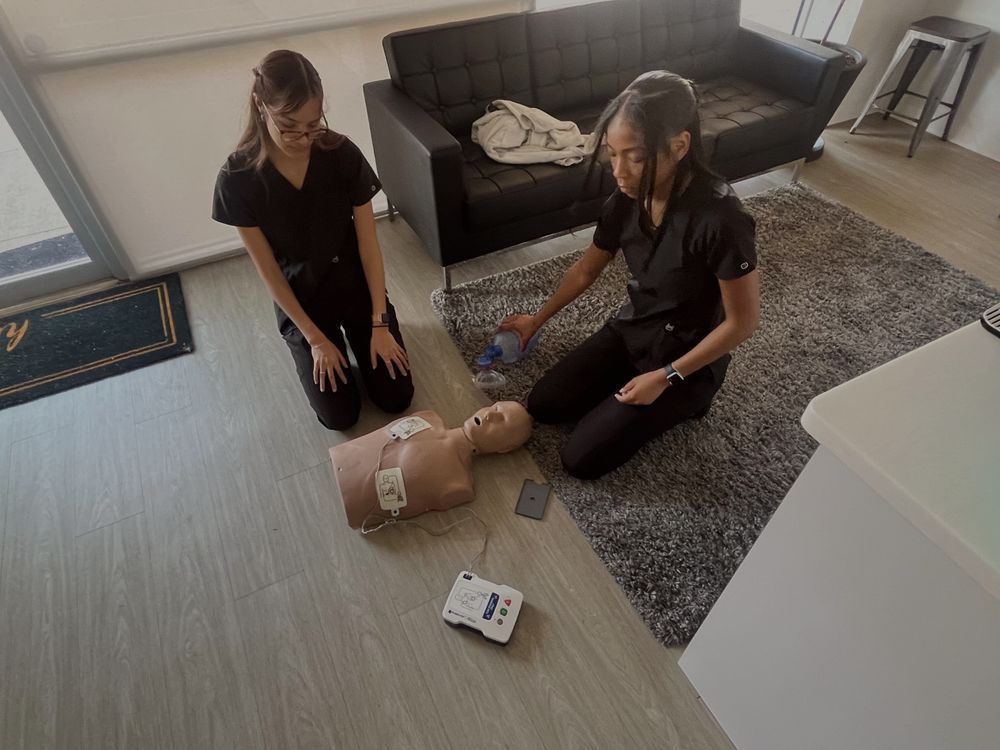
The program runs 18 weeks with classes on evenings and weekends, inside real medical offices. The curriculum breaks into four phases:
Phase 1: Foundations (Weeks 1–4)
Medical terminology — the vocabulary of healthcare. Every chart note, lab order, and provider instruction uses this language. Learning it early means the rest of the course makes more sense.
Anatomy and physiology — practical anatomy, not a college biology deep dive. How the body’s major systems work, why diseases affect specific organs, and what clinical tests measure. This knowledge underpins every clinical procedure you’ll perform.
Infection control — OSHA standards, sterilization science, PPE protocols, hand hygiene. Understanding the science behind infection prevention before you practice the physical procedures.
Patient communication — intake procedures, managing anxious patients, documenting chief complaints, explaining procedures in plain language.
Introduction to vital signs — theory and technique before hands-on practice. Blood pressure by auscultation, pulse palpation, temperature measurement, respiratory rate counting.
Phase 2: Core Clinical Skills (Weeks 5–9)
This is where the course becomes hands-on:
Vital signs in practice — taking complete sets of vitals accurately and quickly. In a busy practice, you’ll do this 20–30 times per day. Speed and accuracy are both critical.
Phlebotomy — venipuncture technique, proper tube order of draw, specimen labeling, patient management during blood draws. O*NET ranks phlebotomy among the most frequently performed medical assistant tasks.
Injections — IM, SubQ, and intradermal technique. Proper needle selection, site identification, angle and depth for each type, aspiration technique, and documentation.
EKG/ECG — 12-lead electrode placement, running the test, recognizing artifacts, transmitting results. Placement precision determines result quality — this requires hands-on practice.
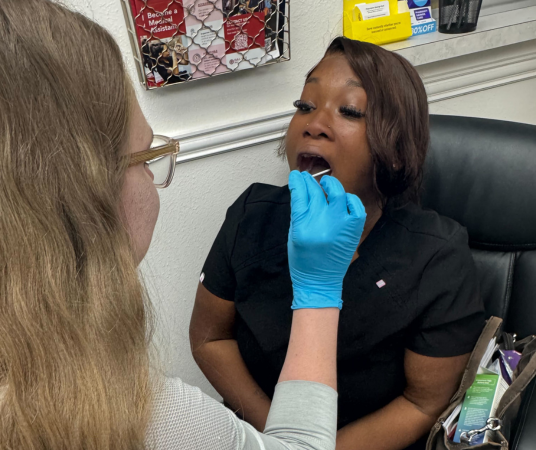
Point-of-care testing — urinalysis (dipstick and microscopic), blood glucose, rapid strep, rapid flu, pregnancy tests. Following quality control procedures and documenting results.
Phase 3: Advanced Clinical and Administrative (Weeks 10–14)
Advanced clinical procedures — wound care, assisting during exams and procedures, specimen collection, nebulizer treatments, ear irrigation.
Electronic health records — navigating and documenting in EHR systems (Epic, eClinicalWorks, Athena, NextGen). Data entry, orders, referrals, prescription management.
Scheduling and patient flow — booking appointments, managing provider calendars, handling urgent requests, coordinating specialty referrals.
Insurance and billing — verifying coverage, processing prior authorizations, understanding CPT and ICD-10 codes, collecting copays, answering billing questions.
HIPAA compliance — patient privacy in practice. What information can be shared, with whom, and how — in documentation, conversation, and electronic communication.
Pharmacology basics — common medication classes, routes of administration, side effects, safety protocols. Not prescribing — understanding what providers order and why.
Phase 4: Certification Prep and Career Readiness (Weeks 15–18)
Comprehensive review — every clinical and administrative domain on the CCMA exam.
Practice exams — full-length simulations under exam conditions to build test-taking stamina and identify weak areas.
Externship — supervised clinical experience in a real medical office in Waco. You apply the full scope of your training with actual patients.
Career readiness — resume writing, interview preparation, job search strategies. Not generic career advice — specific guidance for medical assistant job applications.
What You’ll Be Able to Do After 18 Weeks
By graduation, you’ll have practiced and demonstrated competency in every task O*NET classifies as core for medical assistants:
- Taking complete vital signs accurately and efficiently
- Drawing blood using proper venipuncture technique
- Administering IM, SubQ, and intradermal injections
- Running a 12-lead EKG
- Performing point-of-care tests
- Sterilizing instruments and maintaining infection control
- Navigating EHR systems and documenting clinical encounters
- Managing schedules, insurance verification, and office workflow
- Communicating with patients professionally and empathetically
You’ll also be prepared to sit for the CCMA certification exam.
Career Data
- Median salary: $42,000/year (BLS)
- Job growth: 14% through 2032 (Bright Outlook per O*NET)
- CCMA premium: $2,000–$6,000/year over non-certified MAs
- WIOA funding: May be available — check CareerOneStop.org
Get Started
- See the full curriculum: Program details
- Review tuition and payment options: Tuition
- Talk to our team: Contact us
- Apply today: How to apply
You're only a few months from the medical assistant career you deserve.